Showing posts with label France. Show all posts

Thursday, October 18, 2018

S’il y a des chauvesouris


(un limerick en français)


Oú sont chauvechats, qui chassent chauvesouris ?
demandé mon ami à moi, en faisant un sourire.
Les chauvechats, mon ami,
Sévèrement j’admis,
Ils n’aiment pas les chauvechiens, c’est pourquoi sont parti.

©A.Anichkin, 2018


Un chauvechien,
©Jeremy Nicholl.

Friday, April 27, 2018

Le déjeuner des troglodytes affamés.


Cette nourriture des dieux!

On a flânent à Paris avec un vieil ami, habitué du Quartier Latin et connaisseur de ses charmes. Tout d'abord on a bu généreusement du bon Sancerre avec deux douzaines d’huîtres au café à Saint-Severin, juste en face de Notre-Dame. Puis on s’e promené et on avait étudié le nez ébréchée de Voltaire.

Après cela, bien sûr, on avait encore faim! Et voila, le moment glorieux du jour, mon ami m'a révélé le plus délicieux secret du quartier — l’os a moëlle cuit au four. Ils est servi avec de bâtonnets de pain de campagne grillée, coupé de la longueur des os. Pas de condiments, sauces, garniture ou autres excès et bigoteries culinaires. Ca marche comme ça: vous plongez le pain dans les os, récupérez de möelle et puis ramasser la graisse.

Nous nous sommes assis sur la terrasse avec ce miracle, bien nourris et heureux. Des passants se sont arrêtés pour regarder le dîner de troglodytes, certains nous montrant même du doigts. Une Italienne arrêtée, est venu vers nous et me demandé ce quoi ça, quel est le nom de cette ce plat. L’os a moëlle, delicieux, dis-je. Elle cria: osso bucco! molto bene! Il me semblait qu’elle à se preparait à me “sauter au cou”, mais son mari l’a retenu.

Non, tout ce que vous dites, c’est l'aliment le plus naturel, le cholestérol primordial et propre, rien d'autre.

Maintenant, je demande toujours des os à la boucherie et je le cuis à la maison moi-même.

Recette:

un ou deux os a moëlle par personne (assaisonnez la moëlle à chaque section avec un peau du sel)

bâtonnets de pain

à cuisiner au four à 230ºC pendant 35 minutes et manger tout suite!

L’os est bon pour votre chiens après vous.


©A.Anichkin

Saturday, December 19, 2015

Piaf, Milord and the Spy.

(Russian cultural references)

'Seventeen Moments' (screenshot)


In this sovietesque country called France, only two pleasures reconcile me with her: French women's pretty smiles and Piaf. Take away either — and there'd be nothing left in la Belle.

From as early as I can remember myself, Milord has been cheering me on — what, you're crying? come on, laugh, come on, sing! Allez, riez, milord, allez, chantez, milord! My parents got a 45 rpm single with it soon after it came out.

Non, je ne regrette rien or La vie en rose, really, aren't they, not La Marseillaise, with its hate-filled lyrics about those with 'sang impur' — impure blood, the true French anthems?

On Russian cultural references, Milord, together with Je ne regrette rien, pops up quite unpatriotically and anachronistically in the superpopular Soviet spy thriller series 'Seventeen Moments in Spring' ("Семндацать мгновений весны"). Milord was released in 1959 and Je regrette rien was written in 1956 and recorded by Piaf in 1959. The events in the 'Seventeen Moments' are unfolding during the closing months of the second world war in 1945.

In one of the scenes, the Soviet superspy, an SD Standartenführer Stierlitz aka Colonel Isayev is driving his agent Pastor Schlag to the Swiss border. In the car, they listen to Piaf on the radio.
The Pastor says, 'No, I don't like it, it's how they talk in the markets. I prefer Handel or Bach.' Stierlitz replies, 'This singer will live beyond her death, people will keep listening her.'
'You are too gracious to her,' says the Pastor.
'No, I simply love Paris. And have been in love with it for a long time,' says the Soviet spy.
After his words Je ne regrette rien kicks in with footage of the French national tricolour, de Gaulle and the Resistance fighters. The narrator explains, Stierlitz was there, watching them leave to fight on after the fall of France.'

The full 12-part series are available in full on YouTube (first episode here). For any student of Russia/Soviet Union, it's an absolute must. Most Russians know the film practically by heart and use quotes from it and references to it all the time. There are numerous anecdotes (jokes) based on the characters and situations in the film. On the surface, Tatiana Lioznova's series is gloriously patriotic, but in fact full of hidden, sometimes subversive, motives.

Here is the Alpine drive scene with Edith Piaf on the radio:


Sunday, September 01, 2013

Syrian vote: a triumph of democracy.

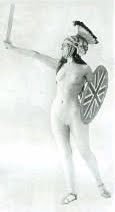
Britannia


Obama is now seeking a Congress approval for military action in Syria in the wake of the Westminster vote against intervention. The vote is not expected until 9 September, so no action is expected until then.

In France, voices are raised in support of parliament getting a say in sending French forces into battle. There is even talk of starting to think of VI Republic for France with stronger parliament. The current V Republic is sometimes called 'monarchical presidency' or 'low intensity democracy.'

In the end, Cameron scored a triumphant victory when he went to the Parliament with a resolution to support military action in Syria and didn't get it. It was a triumph of democracy, due process and common sense.

Read my longer analysis on the Russian side of Tetradki.

Tuesday, September 04, 2012

Russian Artists in Normandy.


A Seascape, Rein Tammik.

Text ©Alexander Anichkin
Pictures ©Rein Tammik, ©Nieka Stenberg, 
©Timur D’Vaatz, 
©Oxana Akhmetova, 
published with permission.

New Russians, of course, follow the rich crowd to the Cote d’Azur to play with their WAGs and yachts.

But a quieter, more discerning invasion is taking place in north-western France where Russian and former Soviet artists are following in the footsteps of famous French painters who have settled in Normandy.

Russians are, of course, no strangers to the region. In the nineteenth Century, Deauville determined to become a centre of centre of elegance and meeting place for nineteenth century celebrities. From 1860 onwards hotels, a casino, Victorian and Moorish villas rose from the marshes. During its days of splendour, during the celebrated Belle Époque and in the 1920s, famous Parisians, millionaires and Russian dukes assembled along the waterfront to bathe in the morning, gamble  through the afternoon and stroll and drink cocktails in the evening. 

Today, however, it is the peculiar, unique quality of the Normandy light as well as the beauty of countryside which has drawn such artists as Monet, Sisley, Turner Pissaro, Seurat and Renoir, Gaugin and Picasso over the years that is inspiring today’s Russian painters inadvertently to follow in the steps of their country’s late aristocracy. 

“The morning mists diffuse the light in such a way as to make shadows almost transparent and gives extraordinary contours to the trees and cliffs and buildings” says Muscovite Nieka Stenberg. “As far as I know this is unique in Europe.”

Stenberg, the daughter and granddaughter of reknown Russian avant-garde painter Georgiy Stenberg and artist and scenographer Enar Stenberg, studied at Moscow’s elite fine arts school the Surikov Academy.  In the 1990s, as the Soviet Union collapsed,  she fell in love with prize-winning Estonian painter Rein Tammik, whose work hangs in Moscow’s prestigious Tretyakov Gallery.

But it was an unhappy period for artists, writers and musicians in Russia. The intelligentsia was tolerated and to some extent protected by the Soviet system which afforded them a reasonable living.  
In the new, mercenary, dog-eat-dog world of post-Soviet Russia it was almost impossible to work. “The pressure was so intense that we lost our freedom of expression,” says Stenberg.  Otherwise I would not have left Russia”

But when, during their exhibition in Helsinki, a French agent offered Tammik and Stenberg, both members of the Russian Federation Union of Artists, a contract to live and paint in France they jumped at the chance.  

Le Treport, Matin, Nieka Stenberg.
Stenberg sold her flat in Moscow and in the early nineties the couple bought a tall narrow house in Eu, near Tréport in Upper Normandy, a wonderful curiosity shop of gallery cum atelier where the two live and work with their French born daughter Marie-Christine.  

“Before coming here I was a confirmed urbanite” says Stenberg, whose work  in both oil and water-colour has a strong modernist, even surrealist, streak and is  much influenced by her work designing theatre sets in Moscow. “But in Normandy I have learnt to appreciate the beauty of the countryside:  a cow bathed in mist or an apple orchard in bloom.  My father came to visit and described Normandy as a “paradise for the artist.”

“When a man changes his environment, everything in his life changes” says Tammik. “But in Normandy I am still on the same shores as I was in Estonia. Thus I can draw inspiration from the Normandy landscape because I feel comfortable within it.

“Living here has also deepened my appreciation of the great artists who have lived and painted in Normandy: I  can see now how much people like Renoir, for example, worked from real life.” 
Tammik, a classically trained, versatile painter is equally at ease  in modernist/avant-garde and traditional-realist styles, describes his style as “post-art”. With a long list of artistic awards to his name, he paints landscapes, portraits and still-lifes but has also completed a series of erotically charged collages,  ‘Les Petites Femmes de Paris,’  centred around old postcards of Parisian prostitutes.  His biggest sellers, however, are the oil on canvas large Normandy seascapes which are snapped up at around 2,500€.  

‘It  is his Baltic roots, his memories of sailing from the Estonian coast which perhaps make him unrivalled in capturing the changing light, the movement an excitement of the sea wave’,  sniffs Stenberg. 

While their work changes hands at international auctions and among private collectors, Tammik and Stenberg also enjoy direct contact with their clients and exhibit every year in Le Touquet, Versailles, Brittany and at Paris’   Carrousel de Louvre.  

further details: www.tammikstenberg.com

Interestingly, the ruggedly good-looking Russian artist Timur D’Vatz arrived in Normandy on the crest of the UK property boom and subsequent British immigration to France  in the early naughties.  

The Morning Hunt, Timur D'Vaatz.
Born in Moscow, D’Vatz had a classical fine arts training during the 1980s at the Republican Gallery of Art in Tashkent, capital of the then soviet Uzbekistan in Central Asia.

Then, a chance friendship in post-soviet 1990s Moscow lead to him fulfilling a lifelong dream to study at the Royal College of Art in London.   In 1994 he exhibited at the Royal Academy’s famous Summer Exhibition and won the Guinness Prize for “First Time Exhibitor”.  Two years later he won the AT Kearney prize at the Academy’s degree show and his career was launched during which he has also won the National Portrait Gallery’s BP Portrait Award in 2002.

D’Vatz’s  decorative, figurative style had always been inspired by Russian icons and medieval tapestries.  “When I arrived in Calvados and saw the Bayeux tapestry for the first time I was incredibly excited. It was as if the way of arranging figures in processions in my recent works was a reflection of  the tapestry itself.

D’Vatz bought his studio near Pont Farcy in 2003 and like so many artists before him is fascinated by Normandy’s skies.  “I am constantly impressed how incredibly fast the cloud formations form and reform. This constant change never ceases to stimulate the imagination.”

D’Vatz’s large canvases or decorative “panneaux” sell internationally and he  exhibits in London, Paris and Florence and the US. 

further details: www.timurdvatz.co.uk

In Normandy, the sun shines very low on the horizon for an inordinately long time before setting.    This may not make sense, scientifically but even non-artists remark upon how long the evening shadows linger.

“The evening sun sinks so low the town acquires extra long shadows as it sets” says Oxana Akhmetova. “Normandy is fantastic for artists.”

The Granville Port, Oxana Akhmetova.
Akhmetova arrived in Normandy’s famous sea port and spa town Granville on a circuitous route through Wales.  Ethnically Russian, Akhmetova was born in Samarkand on Russia’s famous silk route. Daughter of a famous photographer from Lenin’s home town of Ulyanovsk who made his name in the 60’s compiling artistic photo guides for soviet era tourists, she was sent to a boarding school in Tashkent which specialised in art. 

She continued studying fine arts in the Uzbek capital until moving to Moscow in the nineties where she met her British husband and moved to Cardiganshire. 

In Wales, she continued to paint and exhibit, adopting the name Roxana  as an artistic nom de plume,  until the family uprooted to Normandy ten years ago. 

When the marriage broke down, Akhmetova opened her own gallery in Granville as a showcase for both her own work and that of contemporary Russian, formerly soviet, artists. 

“My style is cosmopolitan but based on the soviet realist school of art of my training.”

Despite having her own gallery, Akhmetova loves networking and exhibits locally in Normandy where she sells mostly to French clients. 

“Today I am working on a commission for a huge - 2m x 3m format - oil “artistic representation of Uzbekistan for a local Granville client who wants it for her bedroom!  The canvas is so big I can’t get it into my studio so I am having to work in the garage.”

Irrepressibly energetic, Akhmetova, who now lives with her French partner - her son has gone back to University in Aberystwyth - also gives art classes to the local community and does restoration work.  She is also organising a France wide association promoting the artistic links links between France and Russia. 

Further details: oxanahmetova.tripod.com


Normandy’s artistic heritage


Monet’s picture, Impression, Soleil Levant, 1872, widely regarded as the cornerstone of the Impressionist movement, was painted in Le Havre. Claude Monet is perhaps one of the best known Impressionists and his house and gardens at Giverny are one of the region's major tourist sites, much visited for their beauty and, of course, the famous water lilies. Normandy was at the heart of his work, from the paintings of Rouen's cathedral to the famous depictions of the sunrise at Le Havre and the cliffs at Etretat, as well as the beach and port at Fécamp.

The American art museum, also in Giverny, reflects American inspiration is also well worth a visit.
Monet met Eugène Boudin and Jongkind in Honfleur, and brought fellow artists such as Courbet, Corot, Sisley, Pissarro and Renoir to Honfleur to paint. 

The River Seine was also a source of inspiration to these painters whose new technique enabled them to depict the sparkling colours of moving water and the reflection of clouds and sky. Further north, at the tip of the Manche département, the painter Millet produced several works depicting the local church and peasants working in the fields.

Despite Monet's work hanging in collections all over the world, a remarkable number of Impressionist works can still be seen in galleries throughout Normandy.

While Eugène Boudin, Raoul Dufy and Marcel Duchamp are Norman by birth, numerous other painters fell under the charm of the region, stayed there and even settled in Normandy whose  landscape has been immortalised on canvas not only by Monet, William Turner, Camille Pissarro, Alfred Sisley, Auguste Renoir, Paul Gauguin, George Braque, Pablo Picasso and others.

The celebrated painter Georges Seurat summered in the small fishing village of Port en Bessin - dubbed “Normandy’s little St Tropez" by the writer Françoise Sagan - in 1888 and painted six views of the port.

In the summer of  1874,  the famous Russian painter Ilya Repin holidayed on the Normandy coast and noted in his diary the “astounding beauty of this French province” which reminded him of the agricultural landscapes of his beloved Russia.

Tuesday, July 19, 2011

The Shame of the Name (DSK)


Ever since the outbreak of the Strauss-Kahn affair I’ve been puzzling: why the press in France had no qualms about publishing the name and then the photos of the charwoman, who is the main witness and the victim, in the case against the former IMF chief, while the media in America and Britain have refrained from doing so on ethical grounds. And with that, the French are lambasting the Anglo-Saxon media for their treatment of Dominique Strauss-Kahn himself.

I was glad to find that I am not alone in this puzzlement. In comparing the way Anglo-American press treats the Strauss-Kahn affair with the situation in France nothing is more startling than France24, the news and analysis TV channel. It has both English and French language versions. The English is run according to 'Anglo-Saxon' standards, but the French follows customs of the country's press.

'What you almost certainly won't know, as a viewer of France 24's English-language output, is the accuser's name', writes Douglas Herbert, the International Affairs Editor. 'That's because neither I nor, to the best of my knowledge, any of my anglophone colleagues will utter it, wittingly, on air.' 
'Zap over to our French-language channel, however, and be prepared to enter a parallel broadcast universe. There, Strauss-Kahn's alleged victim is named with the same insouciance as one might tick off the name of the day's stage winner in the Tour de France cycling race. To be sure, there is no formal ban against media organisations naming rape victims in the United States. But most newspapers and TV and radio outfits choose to refrain from voluntarily outing the identities of victims, alleged or otherwise. 
'The basic argument against naming is a standard one: rape is different in nature from other crimes, and many victims, despite some advances, are still blamed for what happened to them. I can't help but feel that there is something gratuitous about the mediatic naming of victims. Nor can I discern any compelling public interest in doing so. 
'On the other hand, I can clearly make the opposite case: that naming victims, and splashing their photos across the front page, as France's Le Monde ignominiously did earlier this week with Strauss-Kahn's accuser, feeds our voyeuristic cravings and little more. 
'In a week when everyone is waxing indignant over the scruples-proof practices of Britain's tabloid media, perhaps a little more indignation is in order over the way much of the French media has outed Strauss-Kahn's accuser. It's a shame that the "Everyone is doing it" mentality is so pervasive in the French media that most journalists here see little need for any ethical debate on the issue. Those who suggest there may be room for such a debate open themselves up to being pilloried as righteous, or smug.'

In America one recent study found that about nine out of 10 women would be disinclined to report a rape if they feared their names would be published by the press. According to activists, the situation is similar, if not worse in France. Julie Muert, a spokesperson for Osez le féminisme group, says in theFrenchPaper:
‘Today, one woman in 10 dares to press charges; two percent of the 75,000 rapes a year end in a sentence, in a country where rape has been recognised as a crime since 1980, but is still not taken seriously and where suspicion is still directed at the plaintiff. Daring to press charges still takes enormous courage. We would like to see the police and justice system given more training to deal with sexual violence, an improvement in the support given to victims, but also prevention measures through learning about respect between girls and boys from a young age.’

Photo of Strauss-Kahn by Stephen Jaffe, from here.

Thursday, June 02, 2011

DSKNY: Fashion and Women's Rights


The ugly incident with Dominique Strauss-Kahn in New York which caused a renewed world-wide debate on the treatment of women, the abuse of power and position by men and of course on the balance of press freedom and privacy has inspired me, among other things, to produce this t-shirt design.

It is of course a variation of the famous DKNY by the American designer Donna Karan which many women have been wearing for years on their shirts – as a fashion item, but also as a statement of support for the working women philosophy as expressed in Donna Karan's work. 

Donna Karan became famous in the 80s when she took over as the leading designer at Anne Klein. I had a brief passionate affair with fashion journalism back then writing for Russian and American press. I even had a cover story in W magazine (my feature is pre-internet, not on their site). I've moved on since, but have kept an interest in design and fashion, especially where it reflects the public agenda.

Interviewing Donna Karan I was very much impressed with her ideas for creating stylish clothes for working women. She designed them with liberation in mind – liberation from worries about what to wear and how to look great. Her clothes do look great, but they are also comfortable at work and easy to rearrange so that a formal professional look magically changes to casual, or casual smart, or even very smart evening look, all by adding or removing a few elements, a jacket, a scarf, a piece of jewellery, the elements that can be taken along to wherever a woman's day takes her.

Other designs make it easy to disguise what a woman might think of as her 'problem' body areas and also to look different every day without having to invest in several different full sets of clothes.

The design is available on spreadshirt.net (click on 'Choose design' and type DSKNY in the search window, then adjust the position of design and choose the size and whatever else you want to customise).


Wikipedia on Donna Karan here.
Photo of DSK from here, cropped in Pages, read how to crop a photo using Pages here.
A slightly more technical version of this post is on I Work in Pages.
Related Posts Plugin for WordPress, Blogger...