Showing posts with label America and Russia. Show all posts

Friday, January 03, 2020

Haji Qassem and War in the Middle East


In Baghdad, early this morning, Iranian General Qassem Soleimani was killed by an American drone strike. The attack was sanctioned by US President Trump. According to the White House, a "decisive defensive action" was carried out. Soleimani was a major general in the Islamic Revolutionary Guard Corps and commander of its Quds Force, the elite division for operations outside Iran. Some say he was the second most powerful man in Iran. Soleimani's convoy was hit by an American drone.


Qassem Soleimani
photo credit

This event can be considered as a "declaration of war" by the USA against Iran. It is one thing to pursue terrorists on the run, it is aomething completely different when a foreign high official is assassinated on foreign soil with official blessing by the President. In any case, this is an extremely dangerous escalation of the conflict in the Middle East, directly affecting Russia as well. What is even more dangerous, is that is that it is not clear what American strategy is for the near future, what are the next steps. 

Reaction in France and Britain shows there was not enough consultation, if any, before the attack. Experts there expect an "asymmetrical" counter-attack from Iran. They also say that the attack has thrown in disarray a strategy of careful, step-by-step strategy of engaging with Iran, of drawing it away from radical actions throughout the region.

Soleimani (among his supporters he was knwon by the respectful nickname Hajj Qassem, like Tolstoy's Haji-Murat) was heading to Baghdad in connection with the prolonged siege of the American embassy by pro-Iranian groups. It is not clear why, was it in order to continue to act against the American military presence in Iraq, or the opposite, in order to restrain the further escalation of the conflict. 

From the outside it is not always clear, but after the fall of the regime of Saddam and especially as a result of a long war with Daesh (ISIS), Iraq turned out to be a field of direct rivalry between the United States and Iran. And the further events unfolded, the more the situation developed unfavourably for the United States. The government of Iraq is now insisting on the withdrawal of all remaining US troops from the country.

Soleimani is considered the chief architect of Iran’s military-political expansion in the region, including an alliance with Russia. As a result, the country has become a regional superpower. This suits some, while others are extremely worried, in particular those in the United States, Saudi Arabia and Israel. In the US, Soleimani is on the official list of terrorists. He is also on the sanctions list of the European Union.

Soleimani was the commander of the Iranian special forces Quds with an estimated number of 10 to 20 thousand elite fighters. Quds supported the armed opposition in Afghanistan against the pro-Soviet government in the 80s, then groups that fought against the Taliban regime, and still later supported the Taliban who fought against the pro-American government.

In Iraq, the Iranian Quds supported the Kurds in the fight against the Saddam regime, and later in the fight against Daesh (ISIS). According to some reports, the Quds militants fought in Bosnia on the side of the Muslims there against the Serbs. In the war against Daesh, Soleimani fighters played a key role in a number of important battles. He himself was reportedly seriously injured. In Iran, these reports were denied.

General Soleimani was a confidant of the Russian military. According to reports, it was "Haji Kassem" who brought Russia to Syria. He convinced Moscow of the possibility of a successful military operation there in order to support the Assad regime and defeat Daesh (ISIS). And he began  pressuring Russians as early as 2013, even before the Ukrainian crisis. During 2015-2016 he visited Moscow four times for negotiations.

With Russian already in Syria, it was Soleimani who led the operation of the special forces that saved the Russian SU-24 pilot Konstantin Murakhtin, shot down by the Turkish F-16 near the Syrian-Turkish border in November 2015. Soleimani contacted Russian commanders and suggested using special forces under the Iranian command to rescue Murakhtin. The rescue group included 8 Hezbollah fighters and 18 Syrians from a pro-Iranian group. With satellite and air support from the Russian forces, the group penetrated 6 km “beyond the enemy’s lines” (that is, apparently into Turkey) and liberated the pilot, who later returned to the Russian base in Syria (according to reports by the AFP, The Times of Israel, Iran’s Fars Agency and the Persian-lnaguage service of Sputnik).

So far, the US conflict with Iran had remained within the framework of the proxy war. Even despite the fact that over the past two months in Iraq there have been 11 serious attacks on US military and civilians. On the eve of the New Year America began moving additional strike force to the region. Now there are up to 14 thousand US troops there, the army, marines, navy and aviation.

It is unclear how much Washington took into account the role of Soleimani in the Russia-Iran-Turkey triangle. It is clear that this blow to Iran is also a blow to Russia. Further escalation of the conflict will put Russia in a dangerous proximity to the military confrontation with the United States.

Saturday, May 17, 2014

The Interpreter Viktor Sukhodrev. RIP.

Sukhodrev interprets Brezhnev and Nixon in 1973. 
Viktor Sukhodrev, the legendary Russian interpreter, who worked with Soviet leaders from Khruschev to Gorbachev, passed away on 16 May 2014.

This excerpt from an article on Russiapedia explains one 'untranslatable' idiom that Khrushchev used during the 'kitchen debate' with Richard Nixon in 1959:


As the conversation progressed, Khrushchev unexpectedly passed onto the international affairs and Soviet-American relations, warning Nixon, that “We are giants, too. If you want to threaten us, we’ll respond with another threat.” It was at that moment that Khrushchev promised to show the United States “Kuzkina mat’”, or “Kuzma's mother” in English, introducing the most famous collocation of the Cold War vocabulary, which for years remained an enigmatic and obscure threat for the US and a turmoil for interpreters. 

As Viktor Sukhodrev, Khrushchev’s personal interpreter recalls, his colleague was confused and translated the expression as Kuzka's mother as “Kuzma’s mother” throwing off the entire American delegation. Later, the American interpreter having just as hard a time, finally decided to interpret it as “we’ll show you what is what, “ which was close, but still not true. Sukhodrev confessed that Khrushchev did explain what he had in mind, on their trip to Los-Angeles, “…I am starting to translate, when Khrushchev suddenly interrupts me, ‘When I was at the exhibition with Nixon, the translation of this phrase was wrong. And it’s really easy. We will show you something you had never seen before.’ I froze for a moment; no dictionary had such meaning for this expression. In other words, ‘We’ll catch up with you and overtake you, and astound you with something you’d never seen before.’”

Later, as the nuclear program was thriving, the Soviet nuclear physicists named the newly-developed a 100-megaton atomic bomb, the only one in history, and named it “Kuz’kina mat’”. With this new notion, the expression started to make concrete sense.

Watch a longish TV interview with Sukhodrev here. Among other things he explains Khrushchev's famous phrase 'we will bury you' and says that 'nothing is untranslatable.'
Photo: Robert L. Knudsen.

Sunday, September 01, 2013

Syrian vote: a triumph of democracy.

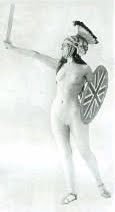
Britannia


Obama is now seeking a Congress approval for military action in Syria in the wake of the Westminster vote against intervention. The vote is not expected until 9 September, so no action is expected until then.

In France, voices are raised in support of parliament getting a say in sending French forces into battle. There is even talk of starting to think of VI Republic for France with stronger parliament. The current V Republic is sometimes called 'monarchical presidency' or 'low intensity democracy.'

In the end, Cameron scored a triumphant victory when he went to the Parliament with a resolution to support military action in Syria and didn't get it. It was a triumph of democracy, due process and common sense.

Read my longer analysis on the Russian side of Tetradki.

Tuesday, August 27, 2013

'Monkey with grenade.'


Rogozin
'The West is behaving in Islamic world like a 'monkey with a grenade,' tweeted Dmitry
Rogozin today. His tweet is widely reported by international press as representative of Russian attitudes to the Syrian crisis as the West is preparing for military action in the wake of apparent use of chemical weapons by the Assad regime.

Rogozin is a vice-premier in the Russian government responsible for the military industries, a Special Representative of the President (Putin) and an outspoken nationalist. He also has the diplomatic rank of ambassador because he served as Russia's representative at NATO, where he appalled Ukraine and Georgia with his comments about these two former Soviet republics. And he has an academic degree of a doctor of philosophy. His Twitter account (in Russian) has 150,000 followers. He is a controversial figure because of his comments.

The 'monkey with a grenade' in his comment, while taken as insulting in international media, is an established, though recent, idiom in Russian. It simply means foolish or dangerous behaviour.

The idiom comes from an anecdote (joke) that apparently started making circles in the early noughties. Currently the expression is often used in reference to blondes (blonde jokes) and bad driving.

One popular version goes like this:

A man sees a monkey playing with a grenade.
—Monkey, stop playing with this. It's dangerous, it may blow you up.
—It's okay,—says the Monkey,—I have plenty more in store.

Take it as you will, black humour or not. Getting involved in Syria may turn out to be 'playing with grenades.'

Photo of Rogozin by A.Savin

Tuesday, August 20, 2013

Every time Putin opens his mouth...


...America gets five students of Russian


Alexander Genis, a Russian-American writer, has been to the Summer meet of the language students and professors at Middlebury College, Vermont. Novaya Gazeta published his thoughful report on what is going on with Russian studies in America. 

He has a word or two to say about Solzhenitsyn, the most famous Russian who had lived in Vermont, and many more on Robert Frost, much loved and translated in Russia.

I found two passages from Genis’ article especially interesting, and amusing too.

At one of the workshops Genis asked postgarduate students to name their favourite Russian ‘book.’

...I cautiously walked into an auditorium to see postgradute students, who didn’t look at all like philologists. The girls were pretty and none had glasses, the boys were big and muscular.
“What is your favorite Russian book,” I asked, to open the discussion.
“The Lady with the Dog,” said one girl.
“The Lady with the Dog,” echoed another.
“The Lady with the Dog,” agreed a boy.
“Geopolitics of Russia,” coldly said another, with a crew cut.
“OK,” I said. And, realising I have used an English borrowing, quickly added an awkward Russian “Ladnen’ko.”  (Note: ладненько, from ладно)

I wholeheartedly support the majority choice. Chekhov’s short story is my favorite too, even if it’s not quite a ‘book.’ The force of what Genis is saying is revealed in another striking passage on President Putin’s contribution to the promotion of Russian abroad.

I haven’t been here for ten years and immediately noticed the change for the better. In the number of students, Russian summer school outshone both Chinese and Arabic. 
When I complimented one of the professors, he replied: “What do you want? Every time Putin opens his mouth we get five more students. The tide changed at the time of the Georgian war and grows stronger with each, so to speak, exotic law or, shall we say, judicial trial.
“Slavonics," we sighed, "is the daughter of the cold war. We should be glad that it’s only cold.”

The Russian version of this article is here,
The Novaya Gazeta article is here, 
Read The Lady with the Dog by Chekhov here (Constance Garnett translation), 
Wikipedia article about Alexander Genis here, 
Middlebury College summer language programmes here.

Tuesday, August 13, 2013

As Obama cancels the summit with Putin... (a comic.)

One of my many hats is graphic design. Here's a recent exercise in #Apple's #iWork with additional help from #ComicLife.


Contact the editor (me) if you want to commission similar. For description of techniques used and tutorials read the blog I Work in Pages.

You can read more in my new book 'iWork for Mac OSX Cookbook' (2012), follow me on Twitter at iworkinpages, like my page I Work in Pages on Facebook and add me to your circles on Google+.

Wednesday, May 09, 2012

Comin' in on a Wing and a Prayer (Russian songs of Victory)


Russian St.George's ribbon


Russia marks Victory Day today known as VE Day in Britain and Victoire in France. 

In the past years the holiday has been built up in Russia as the day of national pride. A drumbeat of patriotic pomp and circumstance accompanies parades and celebrations in Moscow and throughout the country. (Wearing St.George's ribbon badge for Victory day was introduced in 2005. The gold and black are traditional colours of the Russian Empire.)

The literary and musical legacy of the Great Patriotic war, as world war two is known in Russia, is truly amazing.

Contemporaries and historians note, however, that real hits that soldiers and families took to heart were not the patriotic marches and songs of military feats but lyrical numbers, songs about love and personal loyalty in the face of death and separation. 

The war also partially opened up Stalin's Soviet Union to Western pop culture. 

In 1943 Leonid Utyosov, the popular singer and musician, released his version of the American song Comin' in on a Wing and a Prayer, by Harold Adamson и Jimmie McHugh, a number 1 hit in 1943. In Russian it was called Bombardirovshiki – The Bombers. The lyrics were written  by T.Sykorskaya and S.Bolotin who kept the words close to the English original. 

They changed the key line in refrain, though, from 'on a prayer' to 'on the word of honour' – na chestnom slove. This Russian idiom means 'only just managing', 'just holding on', in poor condition. Translators' find also avoided the religious reference that would have been frowned upon in Soviet times. 


In this video Utyosov sings Comin' in on a Wing and a Prayer with daughter Edith. The footage is from the US film Memphis Belle. In the Russian version of Tetradki I publish a video with both English and Russian versions of the song superimposed over footage from the same film.


And this is a country style take on the song in a very smokey 1997 video version by the Russian group Chizh and Co.  

Friday, February 17, 2012

Olga Grushin, The Dream Life of Sukhanov

BBC's Radio 4 is broadcasting a radio play based on Olga Grushin's novel The Dream Life of Sukhanov. The novel is by a Russian writer in America who writes about the life in the late Soviet period. Yet, it is described by one critic as 'breathing new life into American literary fiction'. Quite an accolade!

Here is the link to the programme's website. Click on the player to listen.

Wednesday, December 07, 2011

Richard Sorge, a hero of Pearl Harbor.


Richard Sorge in 1940


Today is the 70th anniversary of Japan's attack on Pearl Harbor, the event that brought America into the second world war*, which, in turn, meant that 
- there was no way that Japan would attack Russia in the Far East; 
- Britain was getting America as an ally against Hitler and was going to war against Japan;
- Germany and Italy were to go to war against America;
- Russia (Soviet Union) was positioned as an Ally of both the USA and Britain;
- and, perhaps most importantly, the strategic odds in the world at war were tipping against Germany. 

Tragic as it was, Pearl Harbor marked a turning point in the war, one of the most important in the chain of events that lead to the Allied victory in 1945.

There is one man who may have been the hero, or anti-hero, depending on how you look at the events, of Pearl Harbor. His name is Richard Sorge (Ree-khard Zohr-gheh), a Soviet spymaster, who ran a secret intelligence network in Tokyo working for the Red Army general staff. He was arrested by the Japanese in October 1941, before the attack on Pearl Harbor, but before that he is generally credited with providing Moscow with three crucial bits of information:

- In the first half of 1941 he passed on details of Hitler's imminent attack on Russia, until then a de-facto ally of Germany, including the exact or almost exact date of the invasion. That report was dismissed by Stalin.
- Later in the year he reported to Moscow that Japan will not attack Russia in the Far East. This time Stalin listened and the Red Army was allowed to move 26 fully equipped, winter-ready and battle-wise divisions from the Far East and Siberia to Moscow. The Russian counter-attack began on 5 December 1941, two days before Pearl Harbor. Hitler's army was pushed back. 
- Sorge also reported that Japan was about to strike South, against America and Britain.

Articles and books about Sorge concentrate on the intelligence he collected and passed on. What still may not be fully understood is his work as an agent of influence. Japan's decision to attack Pearl Harbor was the result of fierce infighting between several political and military factions in Tokyo, notably the Army and the Navy. The Navy saw little glory for themselves in concentrating on land expansion. Sorge through his contacts, some high-placed, may have played an important role in swaying the balance towards attacking America.   

This last bit was investigated by the notorious House Committee on Un-American Activities in 1951  with a view of uncovering red spies who may have helped to catch America 'with her pants down' at Pearl Harbor. They concentrated on how the attack helped the Russians, but did not look into the possible links to British intelligence, in Japan and in the USA. Britain stood to profit from the American entry into the war, but neither in 1941, nor in 1951 could admit to have covertly worked to engineer such entry. 

Sorge was working undercover as a correspondent for several German newspapers. Earlier he joined the nazi party to facilitate his intelligence work. In Tokyo he was well-known on the society circuit and knew everyone who mattered, including the British who still were not at war with Japan. The spy writer Chapman Pincher (wiki) in his book 'Their Trade is Treachery' asserted that Sorge recruited Roger Hollis, the future head of MI-5 in 1930s in China (wiki). This has never been proven, but still can be taken as evidence of Sorge's activity involving the British. 

What distinguishes spies of that era is that many of them, like Philby, were politically motivated intellectuals who thought that working for Russia was working against nazism. In the case of Sorge, whose mother was Russian and father German, there may have been both a patriotic and an internationalist motive. In his mind he may have been serving both his home countries, Germany and Russia, when he worked for the defeat of the nazis and the victory of the Allies, and ultimately of democracy. 

I find it difficult to write this, but the fact remains, Pearl Harbor, with all its human loss, silenced isolationists in America and lead to her joining the fight on the 'right side', the side of democracies. 

Soviets, being on the winning side, did impose their regime on Eastern Europe. But millions of Russian soldiers, having marched through Europe, returned home with first-hand experience of the higher standards of living and a bug of democracy – at least some notion of the West's democratic ways – and a desire for a better life. One of them was a political commissar named Nikita Khrushchev. Twenty years after Sorge's execution, the leader of the Soviet Union Khrushchev saw the French film 'Qui êtes-vous, Monsieur Sorge?', checked with his spy bosses and outed Sorge who until then was not recognised by Russia as one of her spies. Moscow refused Japan's offers of trading him for their own spies and it is still not entirely clear why. 'Because that would mean admitting that it was us who turned Japan against America', one Russian academic told me in the 80s.

Or perhaps it was to cover Sorge's links in the US and Britain, still active many years after the war ended. 

In 1964 on Khrushchev's initiative Sorge was awarded medal of the Hero of the Soviet Union, the country's highest decoration.

The film Qui êtes-vous, Monsieur Sorge? (dubbed in Russian) is available on YouTube. It is based on the book by Hans-Otto Meissner 'The Man with Three Faces: Sorge, Russia's Master Spy'. The Russian text is here.


Photo: Deutsches Bundesarchiv (German Federal Archive) 

*WWII or World War II is Henry Luce's invention to which I strongly object and try never use it. Wars don't deserve to have royal names.

Check this chronology if you are interested in who went to war against whom when on whose side.

Tuesday, November 29, 2011

'Little Sparrow' Dies.

Stalin's daughter Svetlana Alliluyeva died on 22 November in the USA.

She had an amazing life, forever trying to escape from the shadow of the great dictator and never quite being able to.

Without any connection to her at all, this beautiful song, Aderyn Llwyd (Sparrow) by Mary Hopkin sprang into my memory (she recorded it in English too, listen on the Russian Tetradki):

Saturday, October 29, 2011

The Volga Boatmen Big Stick

Russian boatmen without the stick...

Popularised by Shaliapin and Glen Miller, the emblematic Russian folk-song known in the West as the Song of the Volga Boatmen, to Russians is the Song of the Big Stick ("Дубинушка").

The discrepancy is hiding somewhere in the mists of history. There isn't really a dubina there, it's just a metaphor for using brutal force instead of thinking or applying clever machinery. One obvious explanation is that it has its origins as a work-song giving a beat, a rhythm to hard, monotonous manual work, the kind of work done by the men who towed the goods-laden barges upstream along the Volga river, the main trading route through central Russia. In 19th Century they were called the burlaki – the tow men. But the Volga connection must have stuck at some point and the strange burlaki got changed to boatmen.

...and a US boatman with the big one.
In 1870-80s Russian revolutionary intelligentsia started to look to organised manual workers, the proletariat, as the future force for changing the country into a modern democratic nation. Several full-blown song versions appeared building on the theme of what is probably the original folklore chorus of 'hey-ey, ookh-neem' – roughly, 'hey-ho, heave-ho, let's do it'.

The song grew in popularity and was strongly associated with mass protest. So much so that when during the 1905 revolution the tsar yielded and published a manifesto promising personal freedoms and an elected parliament (the Duma) it was sung at rallies throughout the empire. The great singer Shaliapin came to one such meeting, was greeted enthusiastically by the crowd who had demanded that he sing a 'revolutionary' song.

'But I don't know any', he said. 'Will Dubinushka do?'

'Yes!' the crowd roared.

That was how Shaliapin got his 'revolutionary' credentials with the progressive public and was black-listed by the authorities who were preparing a clamp-down. The great singer emigrated from Soviet Russia a few years after the next revolution, the 1917 bolshevik take-over, but Dubinushka, or the Song of the Volga Boatmen, stayed as one of his signature performances. He recorded it several times, including in 1930s.

Glen Miller and his orchestra made a jazz version of the Volga Boatmen which reached number one in the US in 1941 when America had not yet entered the war, but all eyes were on Russia fighting for survival against the advancing nazis. 

In Stephen Ambrose's book' D-Day (link to Amazon) there is a comparison between the American and the British approach to war. While the British were trying to out-think the Germans, inventing new tactics and new machinery, the Americans, he says, were less war-weary, less concerned by casualties. Theirs was push on regardless. The US had more resources, men, tanks and planes, – a bigger stick-dubinushka which they didn't hesitate to throw at the Germans. The Big Stick must have been on the minds of American commanders who grew up in the shadows of Theodore Roosevelt's famous phrase 'Speak softly and carry a big stick; you will go far'. In fact, a relative of Roosevelt, also Teddy, was a commanding officer who took part in D-Day landings and died in Normandy.

When I think of that difference, I also think that it explains the symbolism of Dubinushka for the Russians. In the version sung by Shaliapin there is a verse: 
Англичанин-хитрец, чтоб работе помочь,
Вымышлял за машиной машину;
Ухитрились и мы: чуть пришлося невмочь,
Вспоминаем родную дубину:
Ухни, дубинушка, ухни!
Ухни, березова, ухни!

The clever English, to help them with their work,
Have invented one machine after another;
But we, we are clever too: as soon as it gets tough,
We remember our good old dubina:
Hey, dubinushka, heave-ho,
Heave, you're made of birch, heave-ho!
(-ushk- is a Russian affectionate suffix)

That verse points to the same strength of mass action and disregard for 'clever tricks', that the war historian Ambrose noted on the Western front. Of course, in the mind of a Russian the 'dubina' is closely associated with another dramatic episode in their history and a great work of literature. 'The Big Stick of the people's war' was, according to Leo Tolstoy, the ultimate reason for Napoleon's demise in Russia in 1812.

I doubt very much that Ted Roosevelt drew his Big Stick inspiration from War and Peace. He said the source was a 'West African proverb'. 

Perhaps Americans are not as sentimental about their big stick as in Roosevelt's times, I don't know.

What I don't doubt is that Dubinushka has become the source of numerous self-deprecating jokes among the Russians. A friend of mine, who runs a decorating and removals business, once saw me taking measurements of a piece of furniture before moving it and said ‘That’s somehow un-Russian’ - “Это как-то не по-русски. Мы с ребятами один раз американский холодильник на 11-й этаж по лестнице подняли – а он в дверь не проходит”.  – 'My boys and myself once carried an American fridge up the stairs to the 11th floor because it wouldn't fit into the elevator. Only to discover that it wouldn't fit through the door of the apartment either.'

The Big Stick principle doesn't always work.

Fyodor Shaliapin sings the Volga Boatmen:


And Glen Miller's version:

Read the Russian version of this article here.

Text quoted from 'Dubinushka' in Russian by Alexander Olkhin.

Painting by Ilya Repin, The Burlaki on the Volga, 1870-1873, o/c, 131.5cm x 281cm, Russian State Museum.
Cartoon by William Allen Rogers, Theodore Roosevelt and his Big Stick in the Caribbean, 1904, (Courtesy of Granger Collection) link.

Tuesday, August 02, 2011

The Parasite of the World

So what's the fuss about Putin calling America 'the parasite of world economy'?

It must be the Word. The word evocating the marxist-bolshevist idea that bankers and lenders are parasites exploiting the rest. I am sure that that was what was on Putin's mind. However, without trying to defend him or anything, I just want to point out that in the same session with student journalists he called America 'one of the main locomotives of world economy' and in reply to a different question, about Russia, said that there was no way she can return to totalitarianism. Simply because it 'doesn't work'.

Here is a long clip of Putin speaking to the youngsters at the Seliger political camp (he answers the question about the US compromise on its debt at 8:15 minutes into the clip, the quote about 'parasitism' is at 9:40 into the video. The reply to the question about totalitarianism is at 5:50 min.):


Parasitism was a criminal offence in the Soviet Union. Article 209 of the Russian Federation's criminal code was only repelled in 1991. The poet Josef Brodsky was sentenced under that article and sent into exile. At the trial he said: 'I do not consider myself a person who leads a parasitic way of life'.


More quotes and references in the Russian version of this post.

Tuesday, May 03, 2011

The Twenty Most Important Russian Reads (a list)

In principle I am against all sorts of rankings and 'top' lists. There is always a degree of subjectivity in them. And anyway, a well-educated reader can always tell good literature from bad, but still have personal preferences based on taste, interests, mood and, not least of all, age and experience.

Still, lists are useful as guides or for comparison or argument. 

The web-site Accredited Online Colleges sent me their recently published list The Twenty Most Important Russian Reads. It has the usual set of Tolstoys and Dostoyevskys. Anna Karenina is number one. For Pushkin they recommend Eugene Onegin, his most renowned work, though probably it is better to start with the great writer's prose, The Captain's Daughter for example (Amazon link, also available for downloading here in a 1914 translation as Marie: A Story of Russian Love).

But I was thrilled to see a few entries there that not always make it onto English language reading lists in Russian literature. In particular I'd endorse the choice of Lermontov's The Hero of Our Time (available for downloading in several digital formats, including Kindle, from Gutenberg, here).

I am not sure whether Nabokov needs several entries (Lolita and Pnin). Lolita, for example, was originally written in English and its Russian version reads a bit rushed and is full of anglicisms. However, in the current climate of 'pervs under beds', the Colleges endorsement is really commendable. 'Unfairly thrown around today as a pervert’s indulgence,' they write, 'Lolita is an absorbing book that truly encompasses the honesty, ego and controversy that can define 20th century literature. Plus, it reads pretty fast compared to other Russian books on this list.'

I loved to see the great innovator Vladimir Mayakovsky's A Cloud in Trousers (English text, Part 1 here) in poetry recommendations. The blurb is slightly confusing, though. It speaks of 'suffering under revolution', while the poem was written in 1915, well before the Russian revolution of 1917, and it is primarily a love poem where Mayakovsky seeks to find balance between the intimate and the social.

I think that translations of English poetry into Russian are worth recommending for students of Russian literature and language, for example, Shakespeare's sonnets (several sonnets in Pasternak's translation are here).

Some of the Russian books well-known in the West did not make it onto Accredited Colleges list:

- Mikhail Bulgakov's The Master and Margarita and Heart of a Dog (Amazon link). The Master and Margarita, the novel with parallel stories of Jesus and Pontius and a visit by Satan to the Moscow of 1920s, is full of hilarious satire and moving romance. According to the American literary blog Languagehat it is 'one of the most widely loved novels of the last century'. It circulates in about a dozen different translations.

- Mikhail Sholokhov's And Quiet Flows the Don (Amazon link) is the Nobel prize-winning epic of cossack life before the revolution and during the first world war and the Russian civil war. Pete Seeger's Where Have All the Flowers Gone is based on an old cossack song quoted in the novel.

- Yevgeny Zamyatin's We (Amazon link) is the first modern antiutopia (or distopia), predating and partly inspiring Orwell and Huxley. 

There are other important works of literature that were created during the Soviet period, but are not as widely known as they deserve in my opinion. Here are a few I'd add:

- Yuri Trifonov's The House on the Embankment (Amazon  link), The Exchange, short stories. Trifonov is the deepest observer of the moral dilemmas of Soviet life;

- Vassily Grossman's Life and Fate (Amazon link). The war epic, described as the Soviet War and Peace.

- Valentin Katayev's The Diamond Crown of Mine is a fictionalised 1977 memoir of Russian literary life, mostly of the 1920s period, with practically all important writers appearing under nicknames. The book has not been translated into English in full as far as I know. It was severely criticised by some, mostly for what it isn't rather than for what it is. Read an analysis in English here and the full Russian text is here.

For lovers of poetry I'd recommend 1960s poets Andrei Voznessensky, Bella Akhmadulina and Yevgeny Yevtushenko. Look for brilliant children's authors Kornei Chukovsky and Samuil Marshak, who translated many English nursery rhymes into Russian. I used them in teaching Russian to English speakers.

The Tale of Igor's Campaign is the 12th century poetic epic. Originally written in Old East Slavonic, it has several renditions in modern Russian and a few English translations, notably by Vladimir Nabokov (text here). It contains among other jewels Yaroslavna's Lament, included in Borodin's opera Prince Igor.

The recommendations include, somewhat surprisingly in what is supposed to be a list of Russian books, the American journalist David Remnick's Lenin's Tomb, the account of the dying years of the Soviet Union. I've read it, it's a good book, but for a better grasp of Russian national character I'd recommend The Russians and The New Russians by Hedrick Smith (Amazon links).


Thanks to Emma Taylor for sending the link.


 Yaroslavna's Lament scene from the film version of the opera (1969):

Monday, April 25, 2011

The Star-Spangled Trotsky, or St George, Revolutionary Style


St George's Day is the national day of England. It is on 23 April, the accepted day of his death in 303 A.D.  When it falls on Easter week the Church moves the feast of St George to the nearest Monday after Easter. This year for example it is on 2 May. But St George is also popular in many other countries including Russia. St George is the patron saint of Moscow.

The image of St George slaying the dragon has been popular throughout history. Here is a curious example of how an early Soviet propaganda poster showed Leon Trotsky, commander of the Red Army at the time, in 1918,  as St George slaying the dragon of capitalist counter-revolution (the inscription on the dragon's tail).


Note how Christian, nationalist, communist and internationalist symbols blend in this work. The whole composition is unmistakeably Christian. The golden star behind Trotsky's head looks like a saintly halo, but the red star on his shield bears the communist hammer and sickle. He is dressed in a stylised suit of armour of a Russian medieval warrior – a nationalist symbol, but has red stars on boots and shoulders. The dragon wears a silky top hat, a traditional image in Soviet art for depicting bourgeois enemies.

Having looked at several dozen images of St George I couldn't help noticing that Trotsky is charging at the West – to the left, but in most other images St George is advancing on the East – to the right.
St George on British half-sovereign

The best part is the starry sky around the central image. The white-on-blue stars of the background have an unmistakeable resemblance to the US flag. Why? And why so many stars? I counted 91? In the American flag white stars represent the member states of the Union. I think the symbolism may be the same in this poster. It is probably a reference to the coming 'world revolution'. Early on after the October revolution of 1917 many believed that similar events would soon follow throughout the world, at least throughout Europe, other nations will get rid of their bourgeoisie and join Russia in a union of socialist republics.

One of the lesser known maxims of marxism was that revolution can only happen in a country where proletariat (working class) represents a substantial part of the population and is politicallly conscious. Taking into account the number of working class people in Russia at the beginning of the 20th Century many revolutionaries believed that socialist transformation could only happen if revolutions succeeded in other countries as well. In fact, Trotsky was one of the strongest proponents of 'permanent revolution' and the 'export of revolution'. In a few years time Lenin would postulate that it was possible for socialism to succeed in one separate country. That would be one of the major reasons for the split with Trotsky and his eventual downfall when Stalin took control of the country.
Coat of arms of Moscow

But in 1918 the multitude of stars in the poster represented the expectation that other nations would soon join Russia in a revolutionary union and showed Trotsky as the leader of that victorious struggle.

A new book exploring the influence of religious thinking on Russian revolutionaries is out in the US: Laurie Manchester, Holy Fathers, Secular Sons: Clergy, Intelligentsia, and the Modern Self in Revolutionary Russia.  (A review and an interview with Manchester is on New Books in Russian Studies). Many studies have concentrated on persecution and extermination of the Russian priesthood by the bolsheviks. But many of Russian revolutionaries themselves came from priests' families, including the iconic figure in Russian revolutionary movement Nikolai Chernyshevsky. This book looks at how Orthodox Christian ideas contributed to the intelligentsia's, and in particular the revolutionaries' sense of mission, to their impatient desire to change the world and the people for the better.


Poster from here, author unknown.
Related Posts Plugin for WordPress, Blogger...